Books
La făgădău Evii
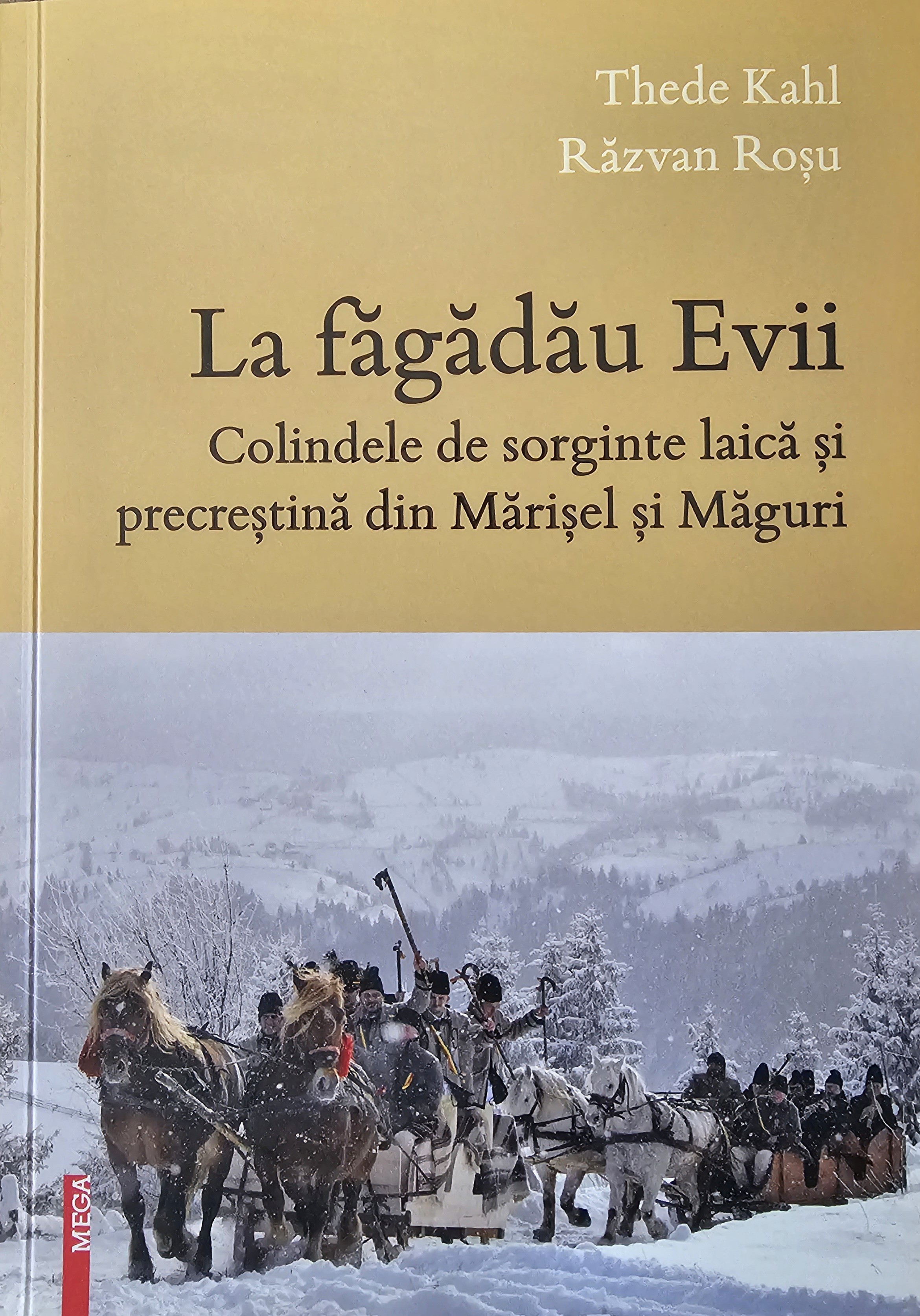
In the mountain villages of Mărișel and Măguri, located in the Apuseni Mountains of Transylvania, there exists a repertoire of carols with secular origins and thematic roots that predate Christianity. Until the early 1990s, none of the carols specific to these two villages referred to the Nativity of the Lord. An analysis of the texts and melodies of these carols, in conjunction with their performances, reveals a Christmas celebration characterized by archaic traits. The carols performed by a group of young men, locally known as Junii Satului (The Village Youths), are particularly effective at transporting listeners back to ancient times—a world still governed by ritual. In this context, one can describe the celebration as a truly "pagan" Christmas—one that aligns more closely with the winter solstice than with the feast of the Nativity. To explore how these secular-rooted carols have endured, the research focused on the specific case of the mountain villages of Mărișel and Măguri, which belong to the Țara Moților region, considered an ethnographic subzone. The phenomenon observed in this area represents a remnant of a type of carol that was historically widespread across Europe. Although this secular substratum has survived only in certain regions, particularly those known for preserving tradition, it remains a significant component of Christmas celebrations within European culture.